

Product description

Steels do have class differences.
MATERIALS MATTER, A LOT.
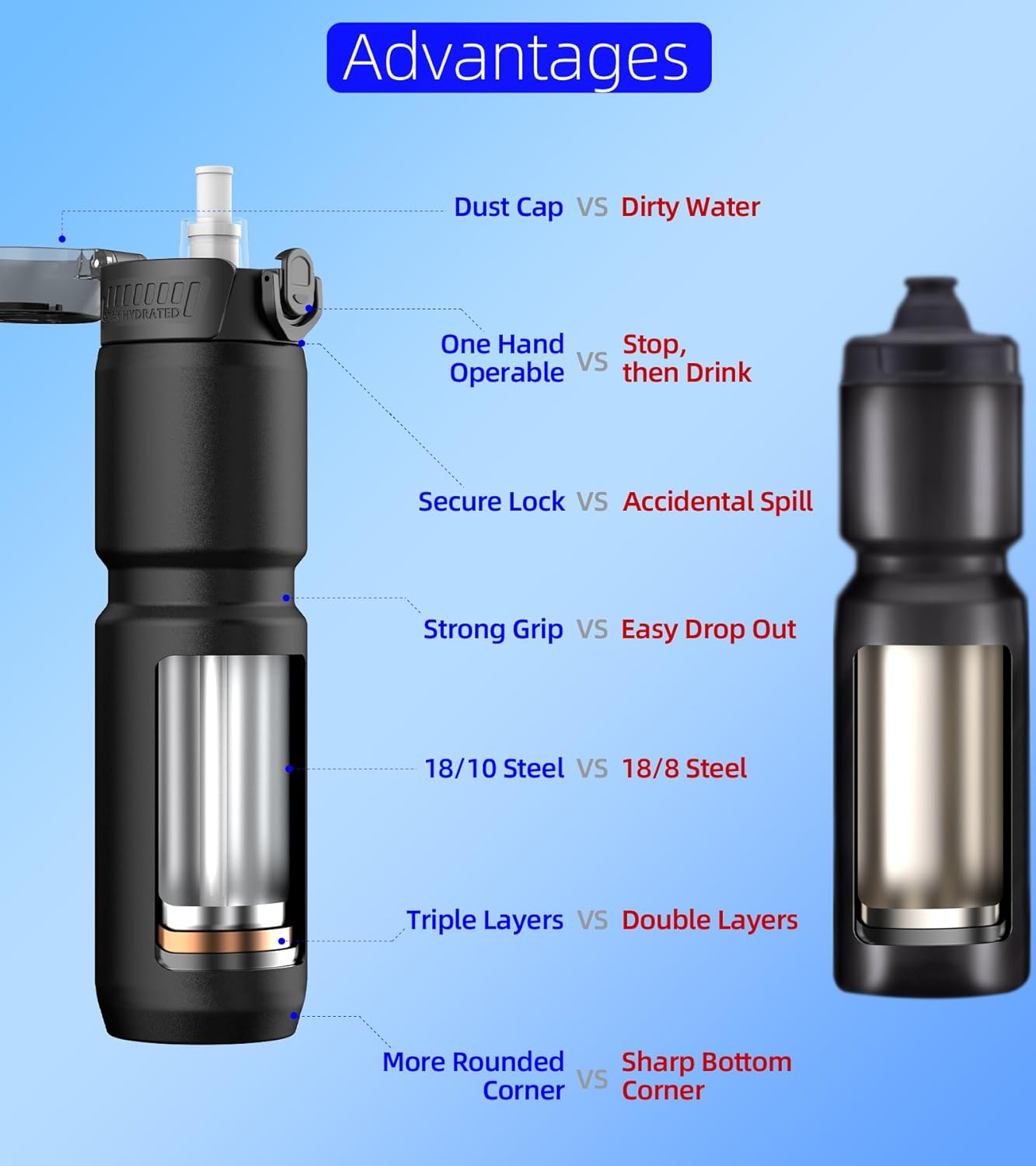
The 18/10 stainless steel is also considered marine grade steel, meaning it can resist seawater corrosion, due to its Molybdenum.
According to Wikipedia, 18/10 steel is widely used for surgical instruments, nuclear facilities, food factories and those pleasuring forks and knives in fine dining.
Premium 18/10 Steel 𝐕𝐒 Normal 18/8 Steel (316 Steel 𝐕𝐒 304 Steel)
| Composition of 316 Steel | 16%-18% Chromium, 10%-14% Nickel, 2% Molybdenum. the extra Molybdenum is the key to great resistance to corrosion. |
| Composition of 304 Steel | 16%-18% Chromium, 8% Nickel, no Molybdenum at all, that’s why 304 steel is much cheaper and less durable than 316 steel. |
| Corrosion Resist of 316 Steel | can resist sea water and most acids and alkalis, and almost anything eatable: from ancient tea to the latest energy drinks. |
| Corrosion Resist of 304 Steel | has a limited resistance to acids, cannot used for marine (will rust quickly if you insist), can hold acid drinks for a short time, e.g. your coke. |
| Food Safety of 316 Steel | less reactive to organic matter in food, so it retains its shine longer. that’s why expensive cutlery is made of it! also less reactive to silicone and plastic, so you won’t get any disgusting metal or plastic odors! |
| Food Safety of 304 Steel | somewhat resistant to the chemical components in food, but the luster of the surface will darken over time, especially when often used for holding acid drinks and beer. |
| Hardness of 316 Steel | even a bit harder than 304 steel, we updated a new machine to forge, thus making the price a bit higher. |
| Hardness of 304 Steel | has a rather satisfying hardness as a civil stuff. but must say, thickness also influences the hardness. I bet you won’t want any dent when your bottle falls on the ground. Manufacturers’ conscience is the first role if only they decide to use thicker steel! |
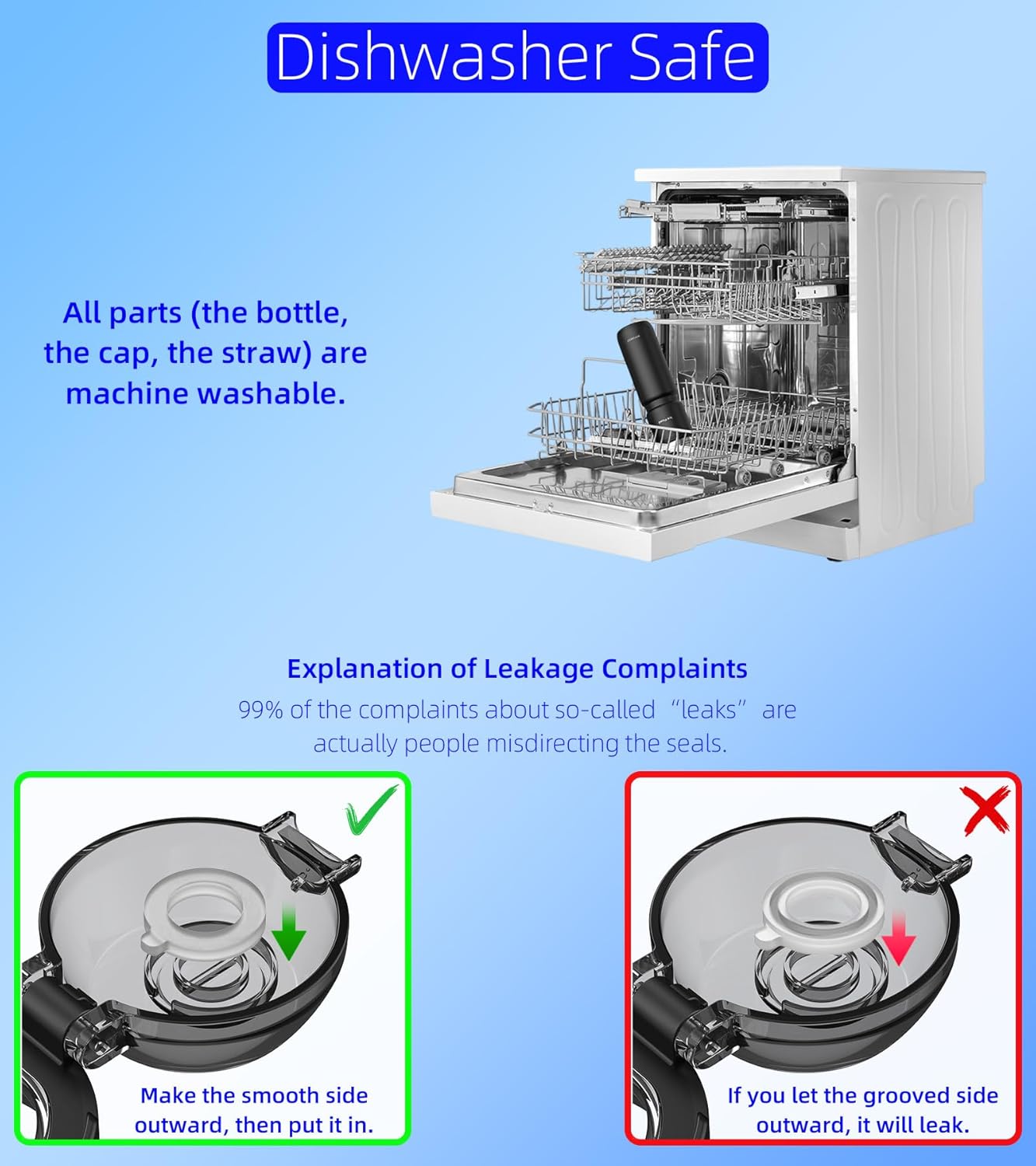
DETACHABLE AND WASHABLE STRAW

Disassemble



Reviews
There are no reviews yet.